Understanding the Wucheng Hall Tuantian Zeng Genealogy Through Clues from Volume 28
Existing catalog information indicates that the Tuantian Zeng Genealogy, Revised Edition, is an extensive Zeng genealogy, with the 28th book being only one of its subdivisions. Its volume structure provides an entry point for understanding the complete genealogy, but the date of compilation, compilers, geographical reference of Tuantian, and specific lineages still require further verification against the prefaces, opening sections, and local gazetteers.
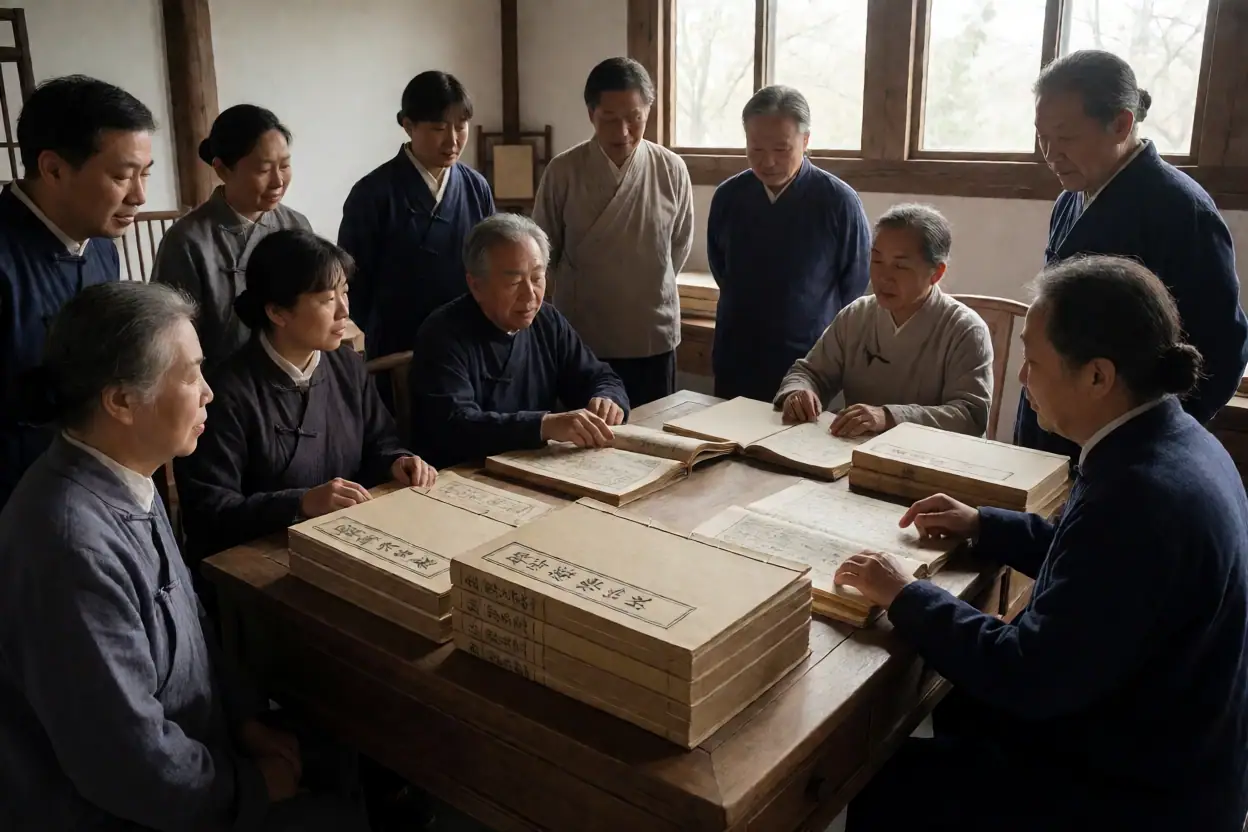
Among the surviving catalog clues is a genealogy titled the Tuantian Zeng Genealogy, Revised Edition, whose title bears the designation “Wucheng Hall.” The complete genealogy is marked as comprising seventy-six volumes, in addition to one separate volume, four opening volumes, and five volumes of collateral lines. At present, what can be confirmed is the subdivision information for the 28th book. As the complete images of the book, copyright page, preface, and full table of contents have not yet been seen, it is currently inappropriate to make definitive judgments about the date of compilation, principal compilers, place of printing, or history of collection and transmission.
Judging from the structure of the title, “Tuantian Zeng” should be an important designation for identifying the family or residential branch to which the genealogy belongs, while “Wucheng Hall” is more likely a hall name or a clan designation within the genealogy’s title. It should not therefore be used to classify the genealogy as belonging to the “Wucheng surname.” Organizing surname-related materials requires first distinguishing among surnames, hall names, place names, and branch names: the surname shown in this genealogy is Zeng, whereas whether “Tuantian” refers to a village, an area, an old place name, or a branch designation retained within the family still requires consultation of the preface, general notes, ancestral hall plans, tomb plans, and local gazetteer records on administrative divisions before any explanation can be offered.
The complete genealogy comprises a relatively large number of volumes, suggesting that its contents may have a comparatively complex organizational structure. The opening volumes may typically include prefaces and postscripts, general notes, lists of genealogy compilers, ancestral hall regulations, or diagrams and tables, but this reflects only the general format of traditional genealogies and cannot be taken as direct confirmation of the actual contents of each volume in this genealogy. The title separately lists “separate volumes” and “collateral lines,” indicating that the compilers may have classified materials outside the principal lineage. Whether the collateral-line records concern marital connections, branches that migrated elsewhere, or other relationships among individuals must be determined from the headings and main text of the original volumes.
The specific position of the 28th book within the complete genealogy also merits verification. The subdivision number may not correspond one-to-one with the volume number: one subdivision may contain several volumes, or it may continue material from the preceding subdivision. When organizing an online genealogy, begin by recording the genealogy title, hall name, total number of volumes, subdivision number, and identifiable page numbers, then extract, page by page, the beginning and end of each lineage record, branch names, places of residence, generation names, and relationships among individuals. When encountering missing pages, duplicate pages, variant characters, or individuals with the same name, preserve the original appearance and provide an explanation rather than filling in gaps based on context.
For ancestry research, sharing the Zeng surname or using “Wucheng Hall” alone is not enough to establish that two people belong to the same clan line. A more reliable comparison path is to organize the known names of ancestors in the branch, spouses, birth-order names, places of residence, and migration memories into a family memoir, then cross-check them against records covering several consecutive generations in the genealogy. It is also possible to consult local gazetteer databases for changes in village history, surname distribution, ancestral halls, schools, notable individuals, and administrative divisions, in order to determine the specific referent of “Tuantian” in different periods. Only when names, kinship relationships, dates, and geographical locations form an interconnected chain of evidence is it appropriate to discuss branch affiliation further.
At present, the value of this genealogy lies first and foremost in preserving a substantial catalog lead concerning a Zeng genealogy. If the opening volumes, prefaces and postscripts, and the main text of the 28th book can later be examined, it may be possible to clarify the date of compilation, the background to the use of the hall name, the sequence of generation names, and the migration history of the branch. Until then, the relevant information should be used as an entry point for searches and a research lead, rather than expanded into a definitive conclusion about ancestral origins.
Learn More and Verify
- A Look at the Wucheng Hall Tuantian Zeng Clan Revised Genealogy through Volume 43
- An Examination of Volume Twelve of the Wucheng Hall Tuantian Zeng Clan’s Continuation Genealogy
- Volume 6 of the Baimaotang Chen Clan Genealogy: from the genealogy title to family clues
- Clues for Reading the Xiangfeng Hecun Shrine Zeng Clan Sixth Revised Genealogy
Genealogy Knowledge and Methods for Compiling Genealogies · Finding Genealogies and Local Gazetteers · Organize family-root-seeking leads