Clues to the Distribution and Migration of the Xian Surname: From Old Village Records to Genealogical Roots-Seeking
The Xian surname is uncommon today. Related villages and family clues remain in Weihui, Henan, and Laiyang and Laixi, Shandong, while some Xian branches in Northeast China may be connected with modern-era migrations. Existing materials are not yet sufficient to link the lineages in different regions; tracing their roots still requires item-by-item verification against genealogies, local gazetteers, and family memories.
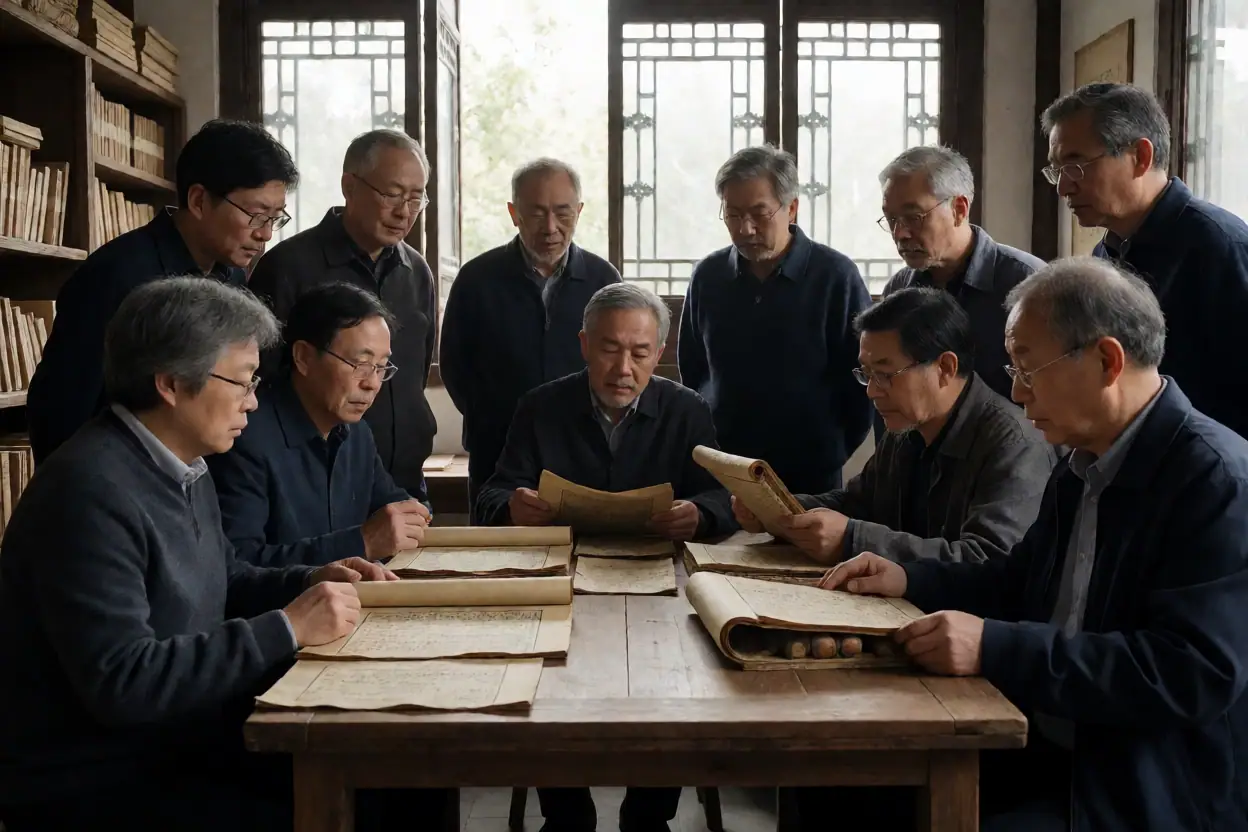
Xian is a relatively uncommon surname with relevant records in traditional surname literature. Because the population is not large, members of the Xian clan often feel an immediate sense of familiarity when they meet, and many families therefore continue to follow the origins of their branch, its migration routes, and the preservation of genealogical records. However, sharing a surname does not mean sharing the same ancestral line. The fact that the surname is the same alone is not enough to conclude that Xian families in different areas descended from the same ancestor or belonged to the same branch.
The local clues currently available are concentrated mainly in Henan, Shandong, and parts of Northeast China. Places such as Dinggou and Guoshui in the Weihui area of Henan have been described in local accounts as important early settlements or areas of expansion for the Xian surname. However, the specific date of the initial migration, the identity of the ancestors, and their relationship with other areas still require confirmation through original genealogies, inscriptions, and local gazetteers. In the Laiyang and Laixi areas of Shandong, place names such as Xianjiazhuang and Xianjiatun are found. Old local records mention that members of the Xian clan may have migrated there around the Ming dynasty and established village names based on their surname. Existing records about their original home and the reasons for their migration are relatively brief, and cannot yet be used to establish a complete lineage.
A Xian family branch in Fushun, Liaoning, has preserved a family tradition that its ancestors migrated from Shandong to areas beyond the Pass, first settling in Xiongyue City before later moving to Fushun; the branch has continued for approximately several generations to the present day. This clue is consistent with the historical context of population movements in modern times, but the specific ancestral home in Shandong has not yet been established. Nor can its origin in Dengzhou Prefecture or Laiyang or Laixi be inferred solely from the regional patterns of the “Chuang Guandong” migration. To continue the investigation, it may be useful to first organize family genealogies, tombstones, ritual records, deeds to old residences, marriage and funeral documents, and oral accounts from elders, then compare them with local gazetteers from both the place of departure and the place of arrival.
Materials related to the Xian surname also mention such ancestral hall names as Runan Hall, Yanggen Hall, Jiangling Hall, Zhengsu Hall, and Hanxiang Hall. Ancestral hall names are generally associated with a commandery designation, ancestral residence, family commemorations, or branch traditions. The same surname may use different ancestral hall names, and the same ancestral hall name does not necessarily correspond to only one distinct branch. Therefore, an ancestral hall name can serve only as a search clue and cannot by itself establish ancestral identity. Generation names, ranking characters, ancestral hall names, and continuous lineage records often have greater identifying value than a single ancestral hall name.
When tracing the roots of the Xian surname, you can begin by creating a chart of your known personal lineage, noting names, generation names, birthplaces, places of residence, marital relationships, and sources of information, while distinguishing among “family tradition,” “transcribed-copy records,” and “local literature.” Online genealogies and surname databases can be used to identify branches with the same names and documentary clues; family memoirs are suitable for preserving oral history; and local gazetteer databases can help verify changes in village names, population movements, and ancestral halls and tombs. Once different materials reveal points of intersection, you can then assess whether a common ancestor or branch relationship exists. Conclusions should be based on verifiable lineage evidence.