An Examination of the Settlement and Migration Patterns of the Xue Surname in Jieyang
The Xue surname in Jieyang is found mainly in Puning, Jiedong, and several villages in the urban area. Existing records trace the migration of some branches back to the Southern Song and describe the formation of settlements including Xuelong, Pingxue, Nancheng, and Xinsong. The relevant population figures, first migrants, and lineage relationships still require further verification against genealogies, local gazetteers, and stele inscriptions.
According to a surname population source dated 2001, Jieyang had approximately 4,381 residents with the Xue surname at that time, ranking 83rd among the local surname populations. The settlements listed include Pingxue Village, Nanxi Town, Puning; Nancheng Village, Xiajiashan Town; Xinsong Village, Lihu Town; Dongsheng Village, Guiling Town, Jiedong; Xinlong Village and Dongliao Village, P上tian Town; as well as Beishi and Ximen in Xima Subdistrict and Dingliu Village in Xianqiao Subdistrict, Jieyang urban area. This figure and ranking apply to a clearly defined period and cannot be equated directly with the current population situation. Village names and administrative affiliations should also be determined according to the current administrative divisions.
Accounts of the migration of the Xue surname in Jieyang point to the early Southern Song as the earliest known lead. Records state that Xue Bozhao, a native of Putian, Fujian, migrated to Longxi Du in Yande Township of former Jieyang County and established Xuelong Village; the present-day location is said to be in the vicinity of Anbu, Chaozhou. This branch subsequently multiplied and spread to what are now Jieyang, Chaozhou, Shantou, and other areas, while after the Qing period some members went to Guangxi, Taiwan, and elsewhere. However, sharing a surname cannot by itself prove a shared lineage. Whether all Xue lineages in these areas originated from the Xuelong branch still requires branch-by-branch comparison based on genealogical lineages, generation names, marriage and burial records, and local literature.
The formation of Pingxue Village is described in relatively specific terms. According to relevant records, in the 16th year of the Jiajing reign of the Ming dynasty, or 1537, Xue Xuemao, a descendant of Xue Kan, moved to the vicinity of the mouth of the Hongyang River on the Nanhé bank in former Huangkeng Du, Puning. In its early period, the area had many small crabs on the riverbanks and was given a village name with Teochew linguistic features. It was later renamed “Pingshichun,” and the separate settlements of Pingxue and Pingsu emerged as the Xue and Su surnames respectively came to live there in concentrated communities. This account concerns the first migrant, the date, and the succession of the branch, and should be further checked against the Xue genealogy of Pingxue, ancestral-hall stele records, and Puning local gazetteers. In particular, the generational relationship between Xue Xuemao and Xue Kan needs to be confirmed.
There are two other migration leads. One account holds that at the end of the Southern Song, residents bearing the Xue, Zhan, and Lü surnames from Fujian moved to former Rongshui Du in Chaoyang and jointly formed Nancheng Village. Another states that in the late Ming, a Xue branch from Zhangpu, Fujian, moved into former Huangkeng Du in Puning. Its settlement was called Songbaiwei because of the ancient green pines and cypresses there, and it was later incorporated into Xinsong Village, Lihu Town. Both accounts may serve as directions for ancestral research, but in the absence of original genealogy volumes, dates of genealogical compilation, and continuous lineages, different villages’ clan relationships should not be merged on this basis.
Regarding local figures, the materials mention Xue Kan and also list Xue Jun and Xue Zongkai. Xue Jun is recorded as having passed the provincial examination in the 17th year of the Hongzhi reign of the Ming dynasty and having served as instructor of Lianjiang County, education instructor of Yushan County, and assistant instructor at the Imperial College. Xue Zongkai is recorded as having passed the provincial examination in the first year of the Jiajing reign of the Ming dynasty and the metropolitan examination the following year, with an official career involving areas such as Guixi and the position of Supervising Secretary. These examination and official-career details are best cross-checked against local gazetteers, examination records, and official biographies, with biographical information added only from reliable records.
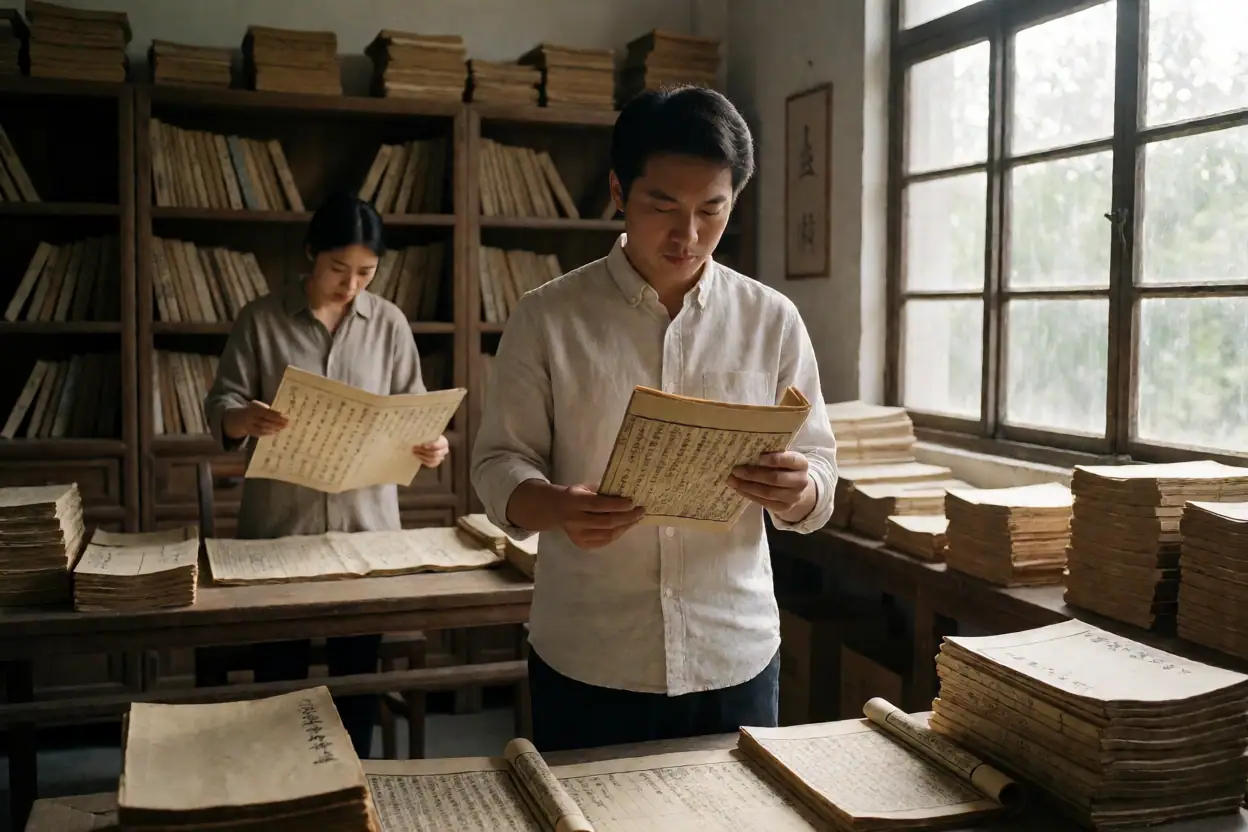
When organizing materials on the Xue surname in Jieyang, the surname database can distinguish between the general history of the Xue surname and local Jieyang branches, while prefaces, lineage tables, generation names, and migration records in online genealogies can be annotated item by item. Family memoirs can preserve oral memories concerning changes in village names, production and daily life, and migrations to Taiwan and Guangxi. Information obtained through ancestral research should also be cross-checked against old place names, administrative changes, and biographical records in local gazetteer databases, gradually forming family archives that can be traced and corrected.