Distinguishing the Traditional Forms of the Zhong Surname: The Origins of 鍾, 鐘, and Family Character Usage
There is more than one traditional form corresponding to the simplified character “钟.” The character used in surnames is generally associated with “鍾,” while “鐘” is more commonly used for clocks, bells, musical instruments, and related meanings. However, individual families should still verify the form against genealogies, household registers, gravestones, and local documents; lineage branches cannot be determined from the character form alone.
The simplified character “钟” can raise questions when converted into traditional Chinese: should the surname be written as “鍾” or “鐘”? This issue involves not only the evolution of Chinese character forms but also the accurate recording of family documents, genealogy revisions, and ancestral research.
Under modern standards for character usage, the simplified “钟” often combines some of the contexts in which the traditional characters “鍾” and “鐘” are used. “鐘” primarily refers to musical instruments, clocks, bells, and related things, while “鍾” is commonly found in surnames and can also express meanings such as gathering and concentration in classical texts. Accordingly, the traditional form of the Zhong surname is generally written “鍾,” and the compound surname Zhongli is also commonly written “鍾離.” It should be noted that historical documents, inscriptions, genealogical copies, and registration practices in different regions are not entirely consistent. The character forms retained by individual families may differ from those in common use.
Both “鍾” and “鐘” contain the metal radical, but their right-hand components differ. The reasons for this distinction are related to ancient script forms, clerical transformation, and the subsequent organization of Chinese dictionaries. Explanations of the relevant character forms, meanings, and usages in ancient dictionaries can help us understand the differences between them, but cannot on their own prove the specific origins of any particular Zhong lineage. Surname origins may involve a state name, a fief, an official position, an ancestor’s name, a character change made to avoid a taboo, or other historical changes. A single surname may also have multiple origins.
In particular, the identical pronunciation of the character “钟” should not be equated directly with a common ancestor. Zhong families in different regions may have formed during different historical periods; even if they all use “鍾,” this does not necessarily mean that they belong to the same lineage branch. Determining whether families share the same lineage usually requires comparison of the founding ancestor who first migrated to a place, places of residence, migration routes, generation names, ancestral hall names, lineage records, and materials concerning graves and ancestral halls. An ancestral hall name can provide a clue, but cannot by itself confirm a blood relationship; matching generation names likewise require further verification against region and lineage records.

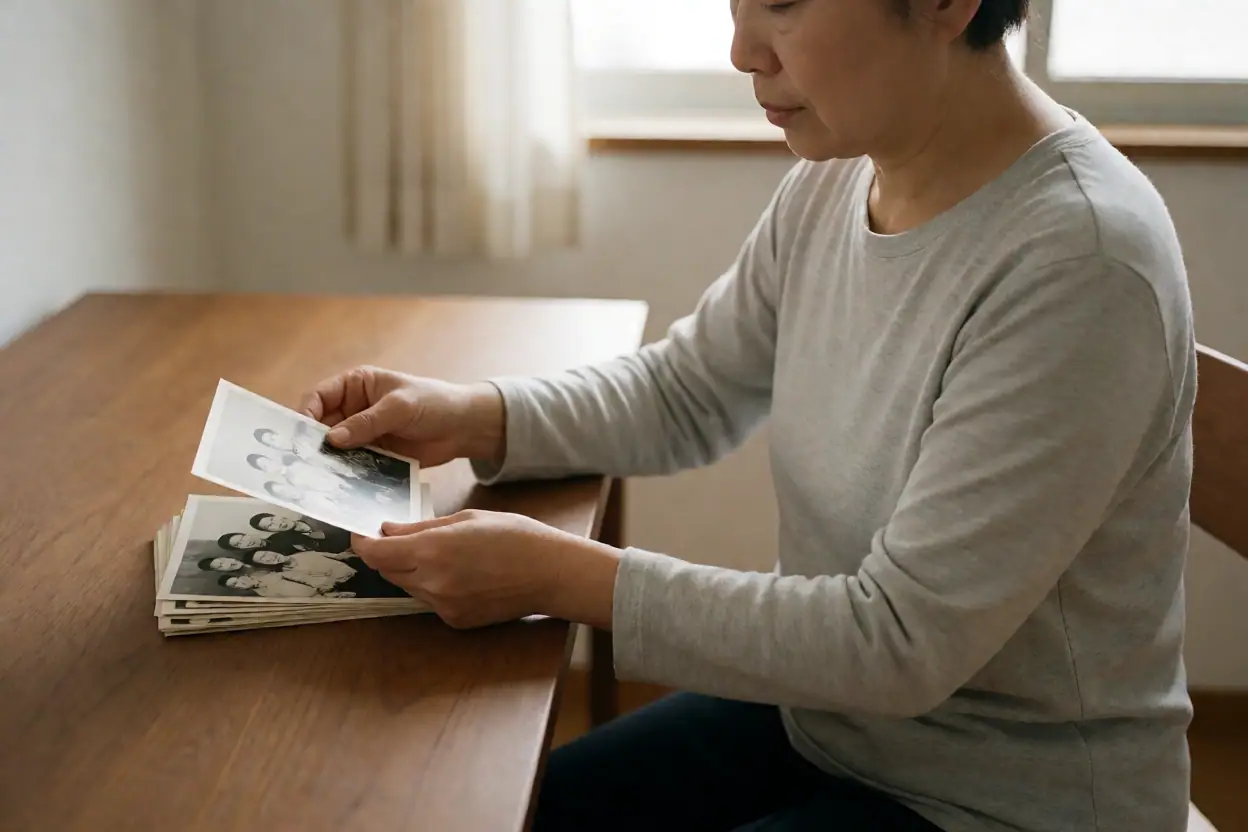
When organizing family records, it is advisable to retain the simplified form, the traditional form, and variant forms found in original documents. For example, a modern registration may record a person as “钟某某,” while “鍾某某” or “鐘某某” appearing in a genealogy, on a gravestone, or in an old contract should be documented with the original form, the date of the document, and the source of the material. This helps prevent clues from being lost during data entry, transcription, or simplified–traditional conversion. Online genealogies can be used to compile information on individuals, lineages, and migration; family memoirs are suitable for supplementing oral histories; and local gazetteers can help verify records of village development, ancestral temples, and notable individuals. Only through cross-referencing surname databases, comparing genealogical records, and corroborating local documents can a relatively reliable family history gradually be established.
Therefore, if the issue concerns only modern conversion into traditional Chinese, the Zhong surname should generally be written “鍾”; when referring to the sound of a bell, a clock, or a musical instrument, “鐘” is usually used. When a specific family is involved, however, the most prudent approach is to respect the character form long used by that branch and verify it against original genealogies, historical archives, and local materials. Character forms can point to cultural and documentary clues, but cannot replace evidence-based examination of ancestors, migration, and lineage records.
Learn More and Verify
- Analysis of Yipin Biotech’s capital transformation and family memories
- Analysis of Luan figures’ memories and family lineages
- Architectural Imprints and Family Memories of the Dai Clan Ancestral Hall in Daicun, Zhenhai, Ningbo
- Investigating the Origins of the Niu Surname: How the Weizi Legend Connects with Family Lineages
Genealogy Knowledge and Methods for Compiling Genealogies · Finding Genealogies and Local Gazetteers · Organize family-root-seeking leads