Folk Memories of Ben Ming Nian Viewed Through the Twelve-Year Cycle
Ben Ming Nian originates in the concept of time embodied by the zodiac calendar and its twelve-year cycle, and over time has become intertwined with the pursuit of good fortune and avoidance of misfortune, psychological suggestion, and family rituals. By combining surname records, genealogies, and local gazetteers, we can observe in greater detail how this custom entered the living memories of different families.
Ben Ming Nian is a highly representative concept of time in Chinese folk culture. According to the traditional zodiac calendar, the twelve zodiac signs follow one another in a cycle; every twelve years, people once again encounter the zodiac year corresponding to the one in which they were born. In the sexagenary calendar, the ten Heavenly Stems are paired with the twelve Earthly Branches, completing one cycle every sixty years. Consequently, folk tradition often understands the rhythm of life through the expressions “one cycle every twelve years” and “one jiazi every sixty years.”
In historical periods when modern household registration and precise birth records were lacking, one’s zodiac sign was one of the important ways people remembered age. For ordinary families, remembering a person’s zodiac sign was often more convenient than accurately recalling a calendar year. Ben Ming Nian gradually acquired stable folkloric meanings through this way of remembering time. However, there is no universally applicable conclusion that Ben Ming Nian inevitably brings misfortune. Notions such as “offending Tai Sui” and “encountering an obstacle” are better understood as an accumulation of traditional beliefs, folk experience, and psychological perceptions.
The customs associated with Ben Ming Nian vary across regions and families. Some places attach importance to wearing red clothing, tying red cords, or wearing amulets, while some families regard it as a reminder to pay attention to the health of elders, the growth of children, changes in marriage, or career plans. These practices express people’s wish to seek good fortune and avoid misfortune in the face of the unknown, while also reflecting how family members use rituals to show care and maintain emotional bonds. The rituals themselves may not have a uniform interpretation, but they are often preserved in family narratives.
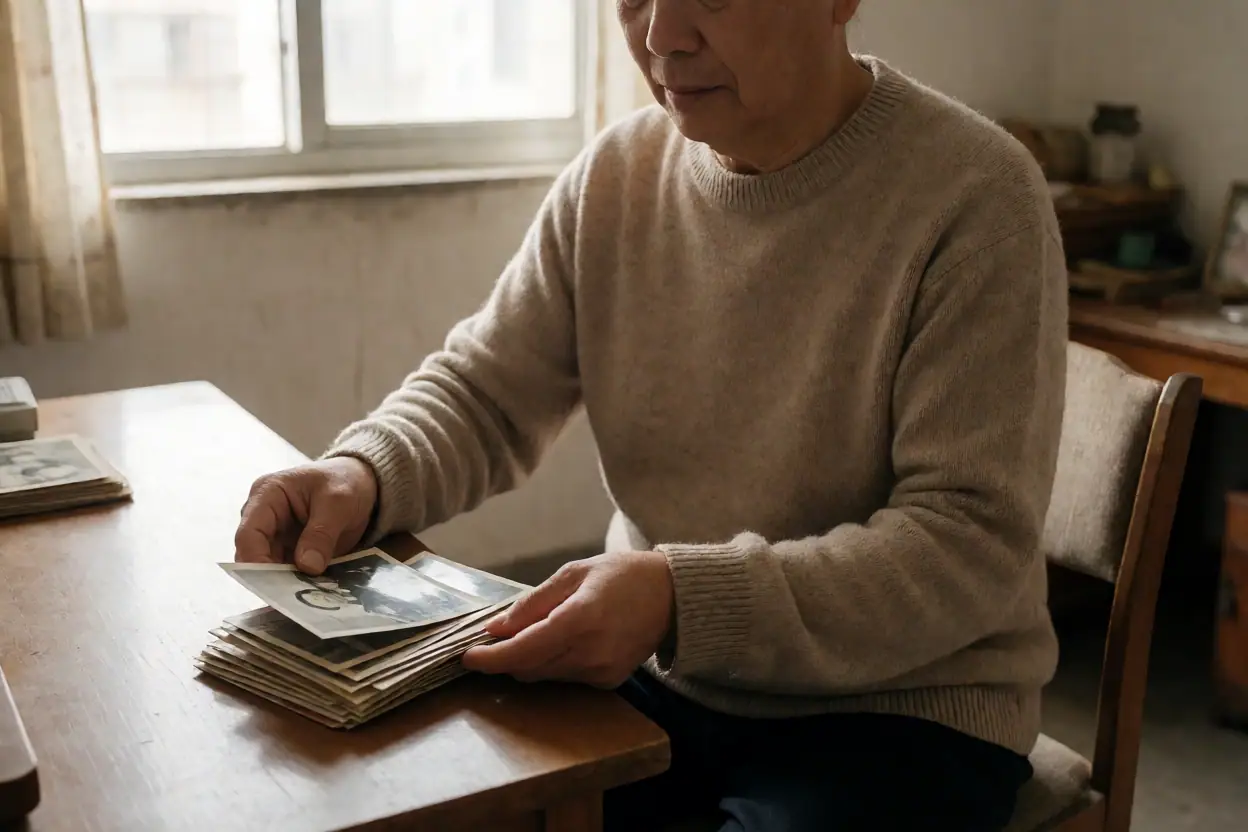
To understand how a particular family views Ben Ming Nian, one can begin with family memoirs, old photographs, letters, records of ancestral rites, and oral accounts, and then compare them with birth years and marriage and relocation records in online genealogies. It is important to note that the years recorded in genealogies may use different systems, including the sexagenary calendar, the lunar calendar, or the Gregorian calendar. Some early records may also contain errors introduced through transcription, conversion, or the process of transmission. Local gazetteers, village records, and related historical documents can supplement the background of local customs, but they cannot directly replace verification of specific individuals’ experiences.
Surname studies can also provide clues for examining family memories. For example, surname records that catalog numerous surnames include information on ancestral localities such as Qinghe, Pingyuan, and Henan, as well as records of the distribution of hall names such as Qinghe Hall in parts of Northeast and North China. Such materials can serve as references when tracing branches and comparing migration routes, but sharing a surname does not mean sharing the same lineage, and a hall name alone cannot prove that a particular family has a confirmed genealogical connection to a specific founding ancestor. When tracing one’s roots and ancestors, it is advisable to cross-reference surname records, online genealogies, family memoirs, and local gazetteers.
Accordingly, Ben Ming Nian is better understood as a form of cultural memory concerning age, time, and family relationships, rather than as a certain prediction of an individual’s fate. In approaching related customs, one may respect elders and local traditions while also maintaining rational judgment. Organizing birth information, migration experiences, and family stories clearly is often more helpful for understanding one’s family history than simply asking whether something is auspicious or inauspicious.
Learn More and Verify
- The Lu Clan Cemetery in Jiangcun, Dingxing: A Family Memory Sustained for Hundreds of Years
- Na Clan Ancestral Hall in Changhuang Village, Xiaoyi, Shanxi: Two Centuries of Rural Memory
- Longjing Shrine in Kuicheng, Datian, and the Lian Clan’s Migration Memories
- Literary Clues on the Neng Surname and Methods for Organizing Family Memories
Genealogy Knowledge and Methods for Compiling Genealogies · Finding Genealogies and Local Gazetteers · Organize family-root-seeking leads