Examining the Pronunciation and Origins of the Chou Surname: From Character Form to Family Memory
When used as a surname, “丑” is usually pronounced niǔ (third tone), though the specific pronunciation should still be determined by family tradition and local usage. Existing surname sources associate its origins with such theories as an ancient divine name, an ancient official title, and a differentiation from the Niu (钮) surname. The relevant lineages still require verification against genealogies and local documents.

Once the character “丑” entered the surname system, its pronunciation was not entirely the same as that of “丑” in everyday vocabulary. Existing surname sources generally record it as niǔ (third tone), a pronunciation phonetically close to the Niu (钮) surname. However, Chinese surnames may retain special pronunciations in different regions. Oral transmission within a family, annotations in old genealogies, and local forms of address often provide a more accurate account of actual usage than general dictionary pronunciations. Therefore, when members of the Chou surname handle genealogical records, search for relatives, or organize family archives, they should record the Mandarin pronunciation, the local pronunciation, and the usage preferences of older family members together.
There is more than one line of evidence in existing accounts of the origins of the Chou surname. One theory links it to Nü Chou (女丑) in ancient legends. Related names appear in ancient works such as the Classic of Mountains and Seas, but mythological figures, tribal designations, and fixed surnames established in later generations cannot simply be regarded as directly connected through inheritance. To determine whether a particular branch of the Chou surname originated in this tradition, it is also necessary to examine early genealogies, epitaphs, local gazetteers, and records of family migrations; a conclusion cannot be drawn solely from identical written forms.
Another group of theories concerns changes in the written forms of ancient surnames. Some sources maintain that the descendants of Niu Xuanyi (钮宣义), a grandee of the State of Wu during the Spring and Autumn period, removed the “金” radical to form the Chou (丑) surname, either to avoid turmoil or because of writing conventions. Other accounts link it to Chou (侴), the official responsible for administering punishments in Chu. These explanations reflect the complex changes undergone by ancient surnames through taboo avoidance, abbreviation, variant forms, surname changes, and regionally specific written usage. At present, however, different legends should not be combined into a single definitive lineage. Whether a particular family is connected with the Niu (钮) or Chou (侴) surname should be determined by continuous, verifiable records of ancestor names, places of residence, and marriage and burial details.
Among the early records of figures bearing the Chou surname, the name Chou Qian (丑千) is frequently found, accompanied by stories of presenting a jade seal and witnessing auspicious omens. These stories have historical and cultural value, but their accounts of auspicious omens may not directly prove the person's family origins. When studying an early ancestor with the Chou surname, researchers should distinguish the respective documentary natures of official histories, local gazetteers, genealogies, and folk legends, giving priority to verifying dates, official titles, native places, and the relevant original texts.
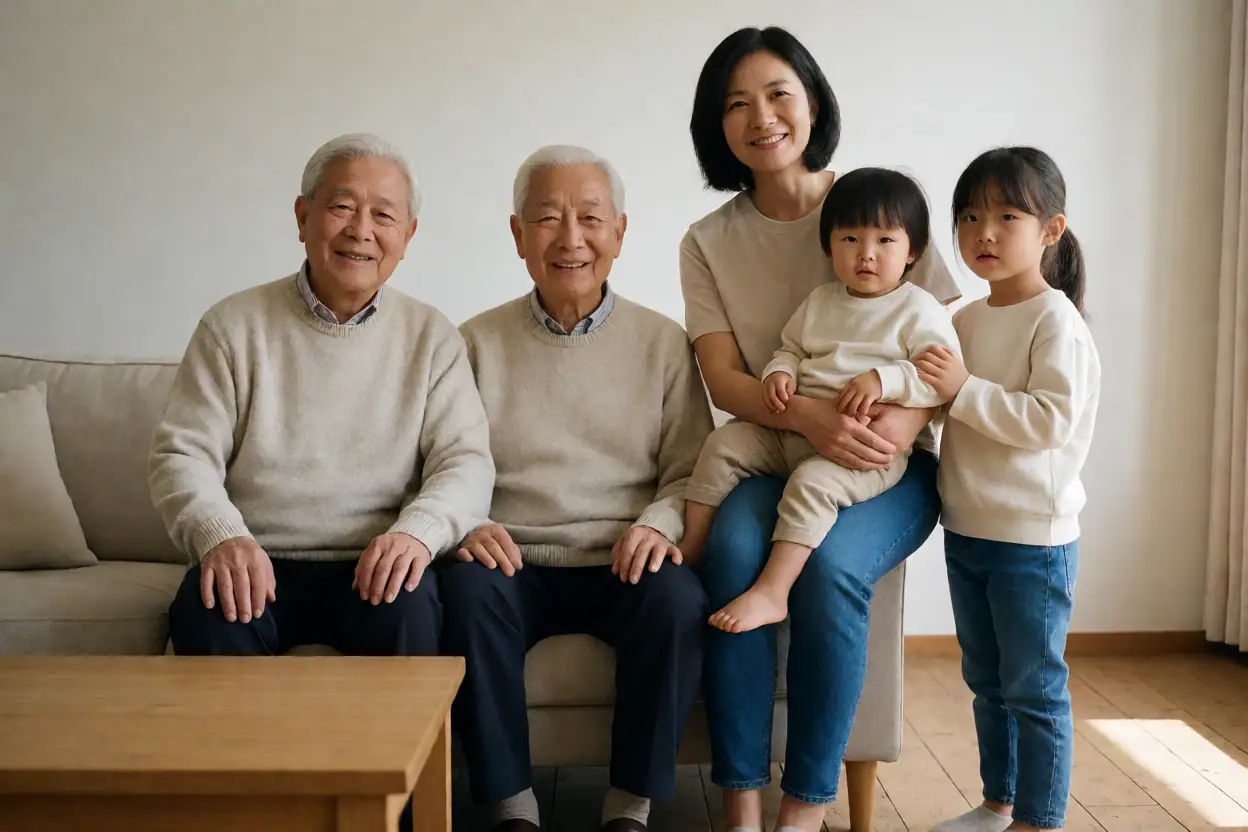
Surname sources also mention such lineage hall names as “Jingzhao Hall,” as well as commandery associations with Jingzhao, Henan, and Hedong, and list Jiangsu, Zhejiang, Anhui, Shanghai, and Fujian among the possible areas of distribution. Hall names and commandery associations sometimes reflect ancestral residences, memories of eminent families, or genealogy-revision traditions; they do not mean that all Chou surname families today descend from the same branch. Sharing a surname does not mean sharing the same lineage, and distribution across regions alone cannot prove a common ancestor.
To continue tracing the origins of a Chou surname family, one can begin with extant family genealogies, prefaces to clan genealogies, generation names, ancestral-hall inscriptions, epitaphs, household registers, and local gazetteers, comparing names, marriages, relocations, and branch designations from one generation to the next. Online genealogies are useful for gathering leads, family memoirs can supplement the social history of modern times, and local gazetteers can help verify changes in villages and the geographic range of individuals' activities. Only after multiple types of material corroborate one another can the migration routes and lineage relationships of a particular branch be described with reasonable confidence.
Learn More and Verify
- Naming a Girl from the Wei Family: A Gentle Choice from Phonetic Harmony and Meaning to Family Memory
- Examining and Verifying Family Memory Through a Liu Family Genealogy
- Hao-Surname Figures and Cultural Lineage Clues: From Historical Records to Family Memory
- Organizing and Critically Examining Family Memories through The Tang Clan Genealogy, Sixth Revision
Genealogy Knowledge and Methods for Compiling Genealogies · Finding Genealogies and Local Gazetteers · Organize family-root-seeking leads