The Growth and Family Memory of the Chu Surname in Yixing
The Chu surname is widely distributed across Jiangnan, with the Yixing area particularly known for its family documents and imperial examination tradition. Claims concerning the descendants of Chu Guangxi, migrations from Yanling, and various regional branches still require item-by-item verification against genealogies, local gazetteers, and burial and ancestral hall records.

The Chu surname is one of the more influential surnames in Jiangnan, leaving a relatively rich legacy of family memories in Yixing, Changzhou, Yangzhou, and other areas of Jiangsu. Existing surname sources identify Henei as the Chu surname’s commandery origin, while related branches are also found in Yixing, Henan, and other places. Records of lineage hall names also include “Henei Hall.” However, hall names, commandery origins, and actual lineage branches do not always correspond one-to-one. Determining whether a branch shares a common ancestry should still rely primarily on continuous genealogical lines and original genealogical records.
Regarding the early origins of the Chu lineage in Jiangnan, some Yixing genealogies identify Chu Guangxi as an important ancestor and hold that his descendants multiplied in the Yanling area. Around the Song dynasty, owing to warfare and social changes, some branches gradually moved to Yixing, Changzhou, Yangzhou, Chizhou, Taizhou, and the southwestern regions. This migration framework corresponds with the broader patterns of movement among Jiangnan families from the Tang and Song through the Song and Yuan periods. However, different genealogical editions may differ in their records of generational succession, founding migrants, and branch relationships; shared surnames or similar place names alone cannot establish that two groups belong to the same lineage.
The local influence of the Yixing Chu lineage is often associated with traditions of imperial examinations, official service, and education. Some sources state that many members of the Yixing Chu lineage passed the imperial examinations over the generations, with certain families in the Qing dynasty becoming known for stories of brothers appearing on the same examination list and fathers and sons entering official service in succession. Other records mention that the descendants of Chu Fangqing’s branch included multiple jinshi degree holders and successful examination candidates. These accounts have value for the cultural history of the family, but the specific individuals, examination details, and genealogical relationships should still be cross-checked against metropolitan examination records, steles listing successful jinshi candidates, local gazetteers, and the relevant genealogies, so that branch traditions are not treated directly as complete historical fact.
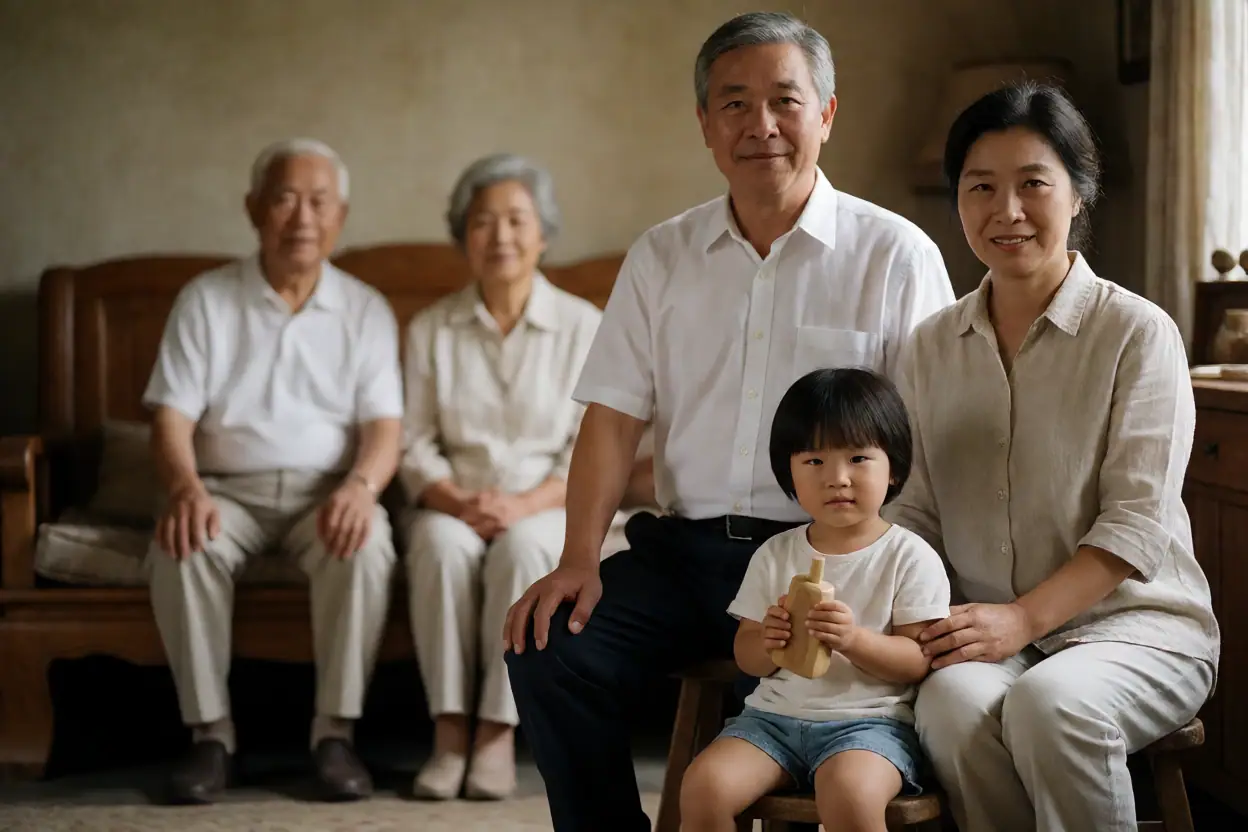
The Guānlín area along western Yixing was once a relatively concentrated settlement of the Chu surname. Local communities often leave clues such as ancestral halls, cemeteries, genealogical prefaces, generation names, and marriage networks. Family members can begin with surviving genealogies, plaques from old residences, sacrificial records, and oral memories to gradually establish the place of the founding migration and the distribution of family branches. Online genealogies are suitable for organizing relationships among individuals, migration information, and versions of genealogical texts, while family memoirs help preserve the history of modern life. To trace earlier generations, it is also necessary to cross-reference local gazetteer collections, inscriptions, and archival materials.
Records of historical figures bearing the Chu surname also present multiple lines of inquiry, and Chu Nanqiang and Chu Anping are among the figures often mentioned in modern society. Whether a person belonged to a specific branch of the Chu lineage should be determined by that person’s family-history materials, records of place of birth, and relevant genealogies. When tracing one’s roots, it is advisable to first establish a verifiable genealogy for recent generations, then connect it upward to the founding migrant, while recording the source, date, and state of preservation of every piece of evidence. Only when the genealogical line is continuous, regional migrations can be connected, and the documents corroborate one another can the relationships among ancestors, hall names, and lineage branches be considered more reliable.
Learn More and Verify
- Shengzhu Hall of the Chu Surname: Ancestral Worship in Chuxiang, Yixing, and Family Memory
- Chu Surname Ancestral Halls and Family Memory: Clues to a Line of Transmission from Zhangzhou to Ziyang
- Ancestral Halls, Migration, and Family Memory in an Ancient Liu Clan Village
- Architectural Imprints and Family Memories of the Dai Clan Ancestral Hall in Daicun, Zhenhai, Ningbo
Genealogy Knowledge and Methods for Compiling Genealogies · Finding Genealogies and Local Gazetteers · Organize family-root-seeking leads