The Migration Memories and Family Heritage of the Dongting Qin Clan of Taihu Xishan
The Dongting Qin clan is concentrated in Xishan on Taihu Lake, Suzhou. Its genealogical narratives address migrations from Piling, the branching and dispersal of lineages, and traditions of pursuing the civil examinations, practicing medicine, and conducting commerce. To document this family, one must cross-reference the general history of the Qin surname, local literature, genealogical lineages, and family memories, carefully distinguishing ancestral origins from accounts of historical figures.
The Qin surname is widely distributed. Traditional commanderies of origin commonly associated with it include Tianshui, Taiyuan, and Hanoi. Some Qin clans use Tianshui Hall as their hall name, while accounts of the surname’s origin also hold that descendants of the Qin state adopted the state’s name as their surname. The Dongting Qin clan of Xishan on Taihu Lake in Jiangsu, meanwhile, is recorded in relevant genealogies as a local Qin family with a relatively long history of settlement. It should be noted that commanderies of origin, hall names, and surname origins are markers of identity at different levels; sharing the Qin surname alone cannot establish that two groups belong to the same lineage.
Existing clues about the ancestry of the Dongting Qin clan state that it descended from the Piling Qin clan and regarded the Northern Song ci poet Qin Guan as an earlier forebear. Related lineage accounts further state that Qin Guan’s second son, Qin Zhan, once lived in Xintang Township, Piling. During the Southern Song, a descendant, Qin Zongmai, came to Xishan in Dongting, after which his son Qin Xun settled there. Qin Xun is therefore regarded in some genealogies as the founding migrant of this branch. This migration chain spans several generations and should still be checked against early genealogical prefaces, epitaphs, local gazetteers, and contemporary documents; it should not be established solely on the basis of later genealogies.
Clan traditions and genealogical materials record that the descendants of Qin Xun gradually divided into the Eastern Qin and Western Qin branches, and subsequently settled in Qinjiabao and places including Tangli, Houbu, Zhenxia, Yuanshan, Jiangdong, Xincun, Piaomiao, and Hancun. The forms, administrative affiliations, and present-day locations corresponding to these old place names may have changed, and can be compared item by item using local gazetteer databases, old maps, inscriptions, and household-register materials. Genealogical research should also verify the founding migrant, spouse, burial site, and generation names of each household branch, to avoid incorrectly linking lineages merely because their places of residence are near one another.
Since the Ming and Qing periods, the family profile of the Dongting Qin clan has often been associated with studying for and sitting the civil examinations, practicing medicine, and conducting commerce. Qin Huitian was born in the forty-first year of the Kangxi reign and died in the twenty-ninth year of the Qianlong reign; he rose to become Minister of the Ministry of Justice, and his Wuli Tongkao is an important work in the study of ritual. The official careers, marriages, and commercial activities of other figures are documented in some cases mainly in family narratives and should be used only after further corroboration with official histories, examination records, biographical accounts, and local literature.
The transmission of medical knowledge is one of the more distinctive local memories of this Qin branch. According to clan tradition, some members practiced medicine for many years, treating conditions including cold damage and gynecological disorders, and came to be associated with popular descriptions of their medical reputation. Such accounts can reflect how local society viewed the family’s occupations, but they can also be simplified or exaggerated through oral transmission. When compiling family memoirs, one may record pharmacies, medical case records, lines of instruction, and patients’ recollections, while clearly identifying the narrator, the time, and the available verifiable evidence.
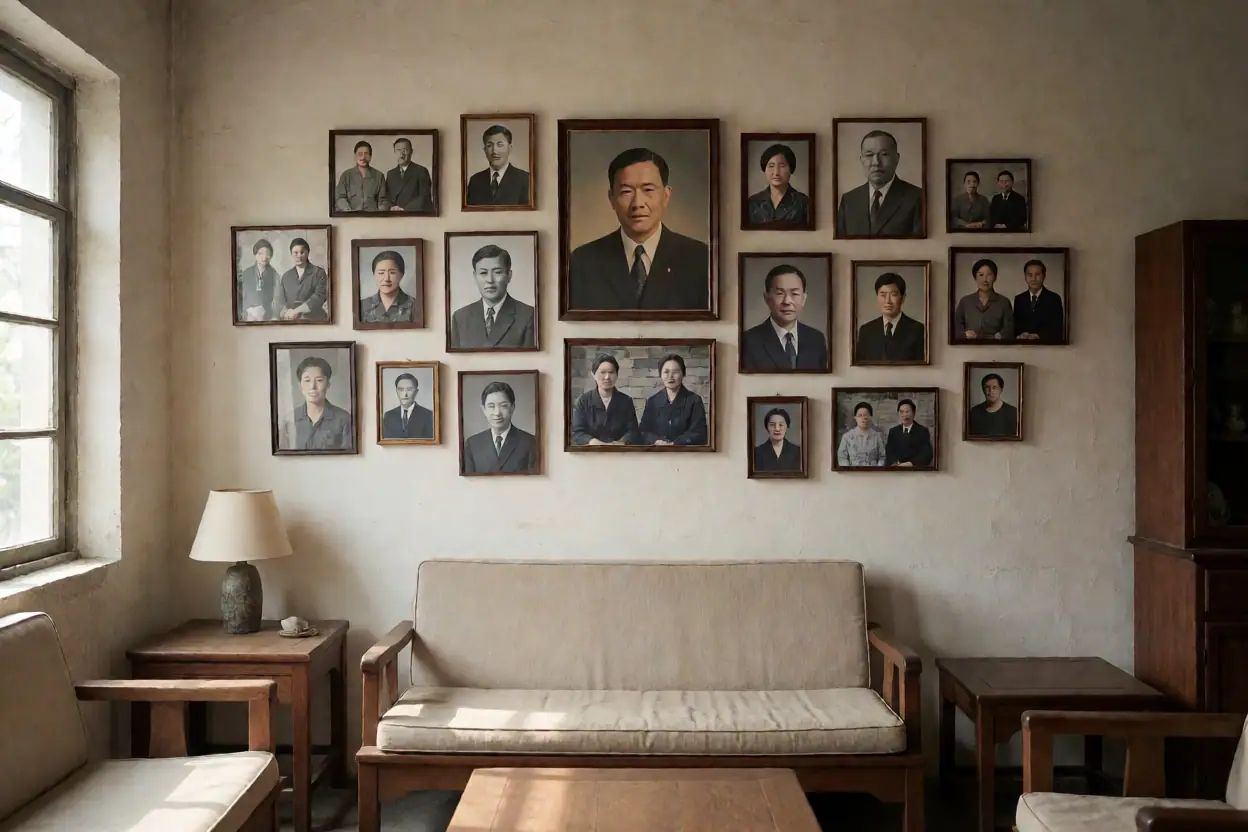
Genealogical clues indicate that the Dongting Qin clan compiled its genealogy several times. One known edition is the engraved edition of the Dongting Qin Genealogy, produced in the twelfth year of the Tongzhi reign of the Qing dynasty under the Yonglie Hall name; it is said to comprise sixteen volumes and to include genealogical prefaces, lineage charts, portraits of figures, and other materials. “Yonglie Hall” should be understood as a hall-name clue specific to this Dongting branch and should not be conflated with Tianshui Hall, the hall name commonly associated with the Qin surname. The transmitted generation-name sequence is “元本惟忠孝,启佑以诗书,永怀先学士,保世有令图”; its actual range of use and starting generation must still be confirmed from the genealogy volumes of each household branch.
To document the Dongting Qin clan today, one may first clarify the overall origins and development of the Qin surname through surname materials, then use online genealogy collections to bring together information from different editions and household branches, supplementing these with family memoirs to preserve oral details and with local gazetteers to verify place names, people, and social activities. The key to tracing one’s roots and honoring one’s ancestors is not reliance on the narrative of a single famous figure, but the formation of a verifiable chain of evidence from genealogies, inscriptions, tombs, local gazetteers, and documents preserved by families.
Learn More and Verify
- The Chu Ancestral Hall in Shuang’an, Ziyang: Memories of Migration and Family Legacy
- Chu Surname Ancestral Halls and Family Memory: Clues to a Line of Transmission from Zhangzhou to Ziyang
- Medieval Family Memory and Genealogical Continuity Seen Through the Stele of the Yan Family Shrine
- Ancestral Halls, Migration, and Family Memory in an Ancient Liu Clan Village
Genealogy Knowledge and Methods for Compiling Genealogies · Finding Genealogies and Local Gazetteers · Organize family-root-seeking leads